
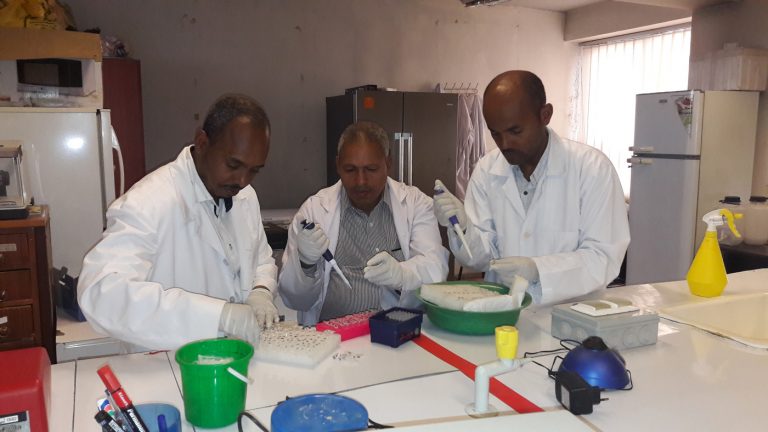
It is highly promising to learn other African staple crops are being improved through CRISPR technology, including plantain resistant to Banana Streak Virus (BSV), maize resistant to Maize Lethal Necrosis (MLN), sorghum resistant to striga, and tef for reduced logging and grain shatter.
Another added advantage of the CRISPR technology is the fact that the role of academic institutions is increasing in the formation of business ventures. The spinout of CRISPR biotechnology companies from academic institutions elsewhere in the world such as Argentina demonstrates a shift in entrepreneurship strategies that were previously led by the industry. This is a lesson to be taken by our governments so that our research institutions are empowered to play a great role in the development of knowledge-based economies though academic born bio-ventures.
Therefore, following the motto of the African Biennial Communication (ABBC) 2019 symposium, “#GetCRISRight“, Africa should provide a conducive environment to public research institutes, local SMEs and private companies to bring the technology close to home.
While using NBTs to solve our pressing problems in agriculture, food and nutrition, environment and health, we need to properly regulate the technology through science-based decision-making processes. Already existing regulatory frameworks can be used with expanded mandate following the example of Argentina where the concept of “novel combination of genetic material” derived from Cartagena Protocol on Biosafety is applied. Proper regulation of genome editing technologies will therefore provide opportunities to foster innovation and productivity, particularly through the involvement of public institutions and SMEs.
Prof. Teklehaimanot Haileselassie is an Associate Professor at the Institute of Biotechnology, Addis Ababa University, Addis Ababa, Ethiopia. You can reach him on tekle1961@yahoo.com